Why do children need palliative care?
Paediatric palliative care (PPC) is also known as palliative care for children. Some children may get life-limiting illnesses, which are diseases that cannot be cured and will shorten their lives.
PPC gives these children, and their families, an additional layer of support to cope with the serious illness.
This support can be given when the child is receiving treatment that is trying to cure the disease, or when the child is no longer able to receive such treatment.
PPC does not mean giving up on the child. Instead, it helps to focus on making the most out of the present life for the child. This includes helping to relieve distressing symptoms, supporting the child and family emotionally, socially and spiritually.
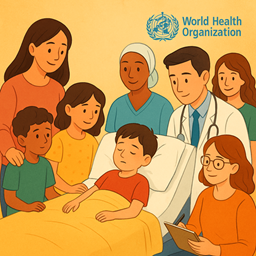
WHO Definition of Palliative Care for Children (2023)
Palliative care for children is the active total care of the child’s body, mind, and spirit, and also involves giving support to the family.
It begins when illness is diagnosed and continues regardless of whether or not a child receives treatment directed at the disease.
Health providers must evaluate and alleviate a child’s physical, psychological, and social distress.
Effective palliative care requires a broad multidisciplinary approach that includes the family and makes use of available community resources; it can be successfully implemented even if resources are limited.
It can be provided in tertiary care facilities, in community health centers, and even in children’s homes.
What are Life-limiting Illnesses?
Life-limiting illnesses in children are conditions that cannot be cured and may result in shortened lives. However children with life-limiting illnesses may live an active life for many years. Children with life-limiting illnesses will benefit from palliative care.
Watch the video to learn about the types of life-limiting illnesses in children.
How Is Paediatric Palliative Care Different from Adult Palliative Care?
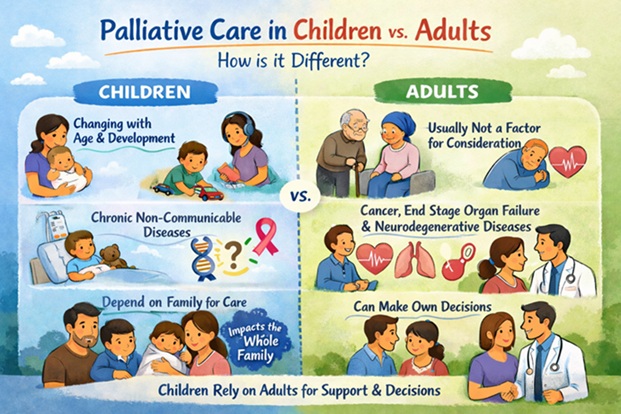
Children change as they grow, in terms of their body, understanding and skills. Their treatment and needs are therefore different according to their age.
The type of diseases in children who need palliative care are different from adults who need palliative care. Some children may suffer from chronic non-communicable diseases such as congenital or rare diseases which are not fully understood by doctors yet.
Children depend on adults for their care, and serious illness can affect the whole family. They are often not able to make decisions for themselves. Decisions are often made based on discussions among parents, family members, and healthcare professionals about what is in the best interests of the child and family.
Paediatric Palliative Care Also Supports Parents and Caregivers
Children’s palliative care is not just about caring for the child—it is also about walking alongside parents and caregivers in their journey.
Caring for a child with a life-limiting illness is filled with challenges, sacrifices, and deep love. Parents often give their all—physically, emotionally, and financially—to ensure their child feels safe, comforted, and loved.
Pediatric Palliative Care (PPC) provides vital support for these parents and caregivers. It helps them manage the stress and exhaustion of caregiving, offers guidance in difficult decisions, and ensures they are not left to walk this journey alone.
Communicate with Children Through PLAY
For children, play is more than fun — it is their way of speaking. Through play, they can show their feelings, worries, and hopes, even when words are too difficult. It allows parents to better understand their child’s heart and emotions.
In palliative care, play helps ease stress, brings comfort, and creates moments of joy. It strengthens the bond between parent and child, offering a gentle way to connect, listen, and share love during the journey together.